
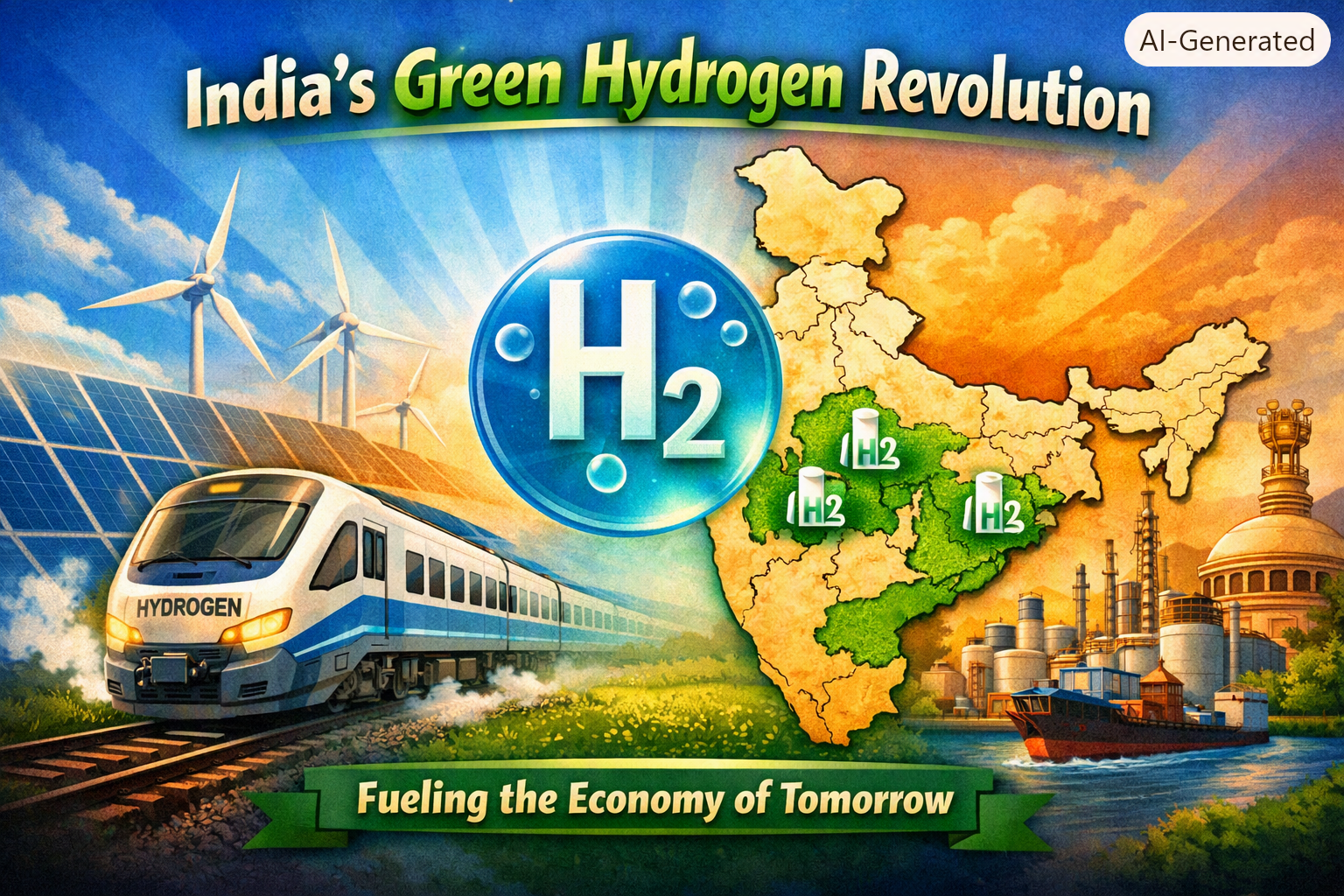
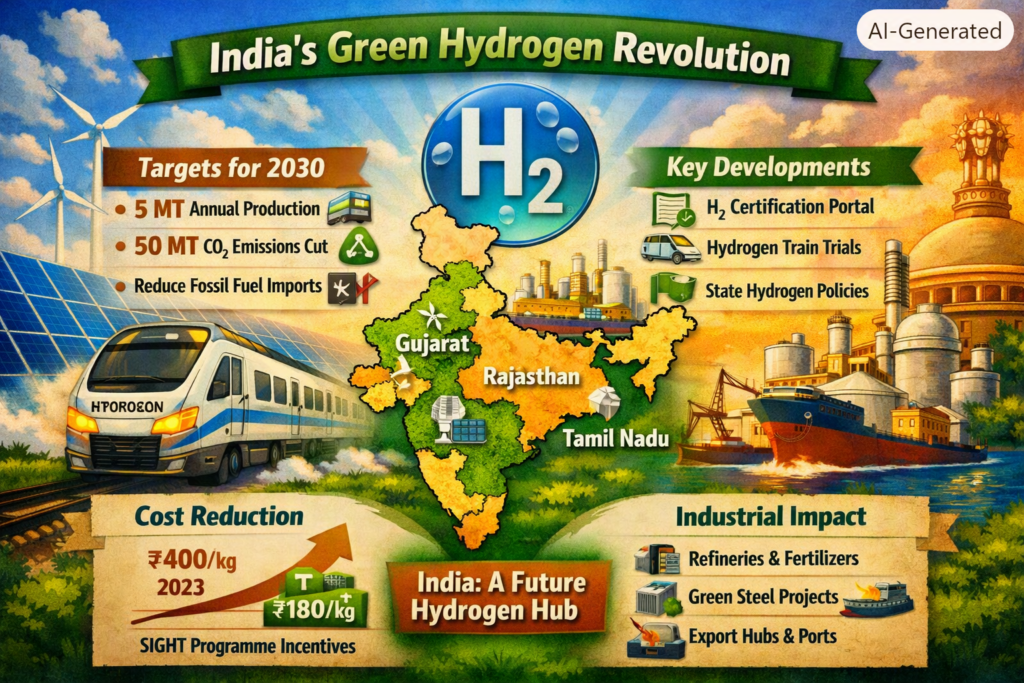
India is entering a new era of clean energy transformation through the Green Hydrogen Revolution under National Green Hydrogen Mission (NGHM). Approved in January 2023 with an outlay of ₹19,744 crore (~USD 2.4 billion), the mission aims to make India a global hub for green hydrogen production and exports. By 2030, the target is to produce 5 million tonnes annually, reduce dependence on fossil fuel imports, and cut 50 million tonnes of CO₂ emissions. This ambitious plan is not only about energy security but also about reshaping India’s economy and industrial base.
🔗 PIB – National Green Hydrogen Mission Press Release (pib.gov.in in Bing)
⚡ Key Developments in 2026: Green Hydrogen Revolution
- Certification Framework (June 2026): India launched a Green Hydrogen Certification Portal to ensure transparency and credibility in production. 🔗 MNRE – Hydrogen Certification Framework
- Hydrogen Train Trials (July 2026): India’s first hydrogen‑powered passenger train successfully completed trials in Haryana, emitting only water vapor.
- State Policies: Gujarat, Tamil Nadu, and Rajasthan have notified hydrogen policies, creating regional hubs expected to attract billions in investment and generate thousands of jobs.
📊 Cost and Market Outlook
| Year | Estimated Cost per kg | Key Drivers |
| 2023 | ₹400/kg | High renewable costs, early electrolyser tech |
| 2026 | ₹280–300/kg | Falling solar/wind tariffs, pilot projects |
| 2030 | ₹180/kg | Scale economies, advanced electrolysers |
The SIGHT Programme (Strategic Interventions for Green Hydrogen Transition) is driving this change by offering incentives for electrolyser manufacturing and production. Competitive bids for green ammonia have already achieved prices close to parity with grey ammonia, showing India is on track to achieve cost competitiveness. 🔗 PIB – SIGHT Programme Details (pib.gov.in in Bing)
🏭 Industrial and Policy Impact
Green hydrogen is set to transform multiple industries:
- Refineries & Fertilizers: IOCL, BPCL, and HPCL have signed contracts for large‑scale hydrogen supply. Fertilizer plants are testing hydrogen‑based ammonia production.
- Steel Sector: Pilot projects are underway to inject hydrogen into blast furnaces, replacing coal.
- Export Hubs: Ports such as Kandla and Paradip are being developed as hydrogen export terminals, linking India to global markets.
🌐 Global Positioning
India’s abundant solar and wind resources give it a natural advantage in producing green hydrogen at scale. With strong policy support and international partnerships, India is poised to become a major exporter of green hydrogen and derivatives like ammonia and methanol.
Countries in Europe and Asia are already looking to India as a reliable supplier, especially as they seek alternatives to fossil fuels amid geopolitical uncertainties. By 2030, India could emerge as one of the top three global players in the hydrogen economy.
Challenges to Green Hydrogen Revolution
✍️ Conclusion
The Green Hydrogen Revolution is more than an energy initiative — it is an economic transformation strategy. By lowering costs, scaling production, and integrating hydrogen into transport, steel, and fertilizers, India is building a cleaner, more resilient economy.
🗣️ Neutral Opinion
While the reservation policy in India has historically been about social justice, the green hydrogen policy is about economic justice for future generations. Both highlight India’s balancing act between tradition and transformation. The hydrogen mission is promising, but its success will depend on consistent policy execution, global demand, and cost competitiveness. If India manages these challenges, it could redefine its place in the global energy order.