
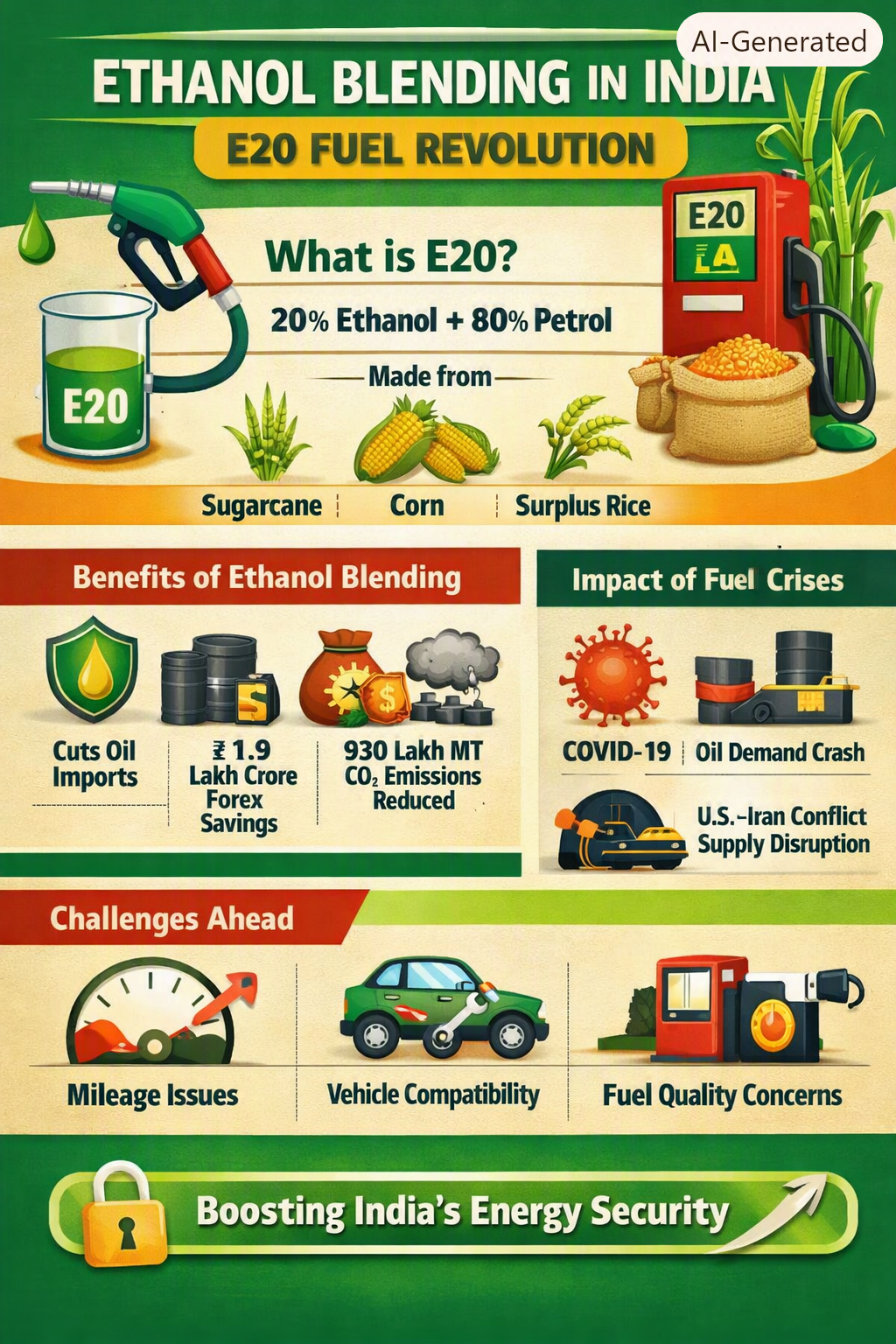
Petrol isn’t just a liquid—it’s geopolitics in a barrel. Every war, every pandemic, every supply shock reminds us that oil is the world’s most fragile addiction. And now, India is trying to break free with a sugarcane shield: ethanol blending.
Ethanol Blending: A Global Survival Strategy
Ethanol has always been the underdog of the fuel world. Henry Ford once imagined cars running on alcohol, but cheap oil sidelined the idea. Then came the 1970s oil crisis. Brazil, desperate to cut its dependence on imported crude, launched the Proálcool programme, turning sugarcane into fuel. Today, millions of Brazilian cars run on E25 or even pure ethanol.
The United States followed with corn ethanol, embedding E10 fuel into its national supply chain. Europe leaned on wheat and sugar beet. Each region found its own crop, its own way of cutting the oil cord.
The lesson? Ethanol blending isn’t just about cleaner fuel—it’s about survival when oil markets go wild.
Crisis That Made Ethanol Relevant
COVID-19 Pandemic
When the world shut down in 2020, oil demand collapsed. Planes grounded, highways empty, crude prices crashed. But the shock revealed something deeper: our fuel lifelines are brittle. Nations began talking about resilience, not just price. Ethanol, produced locally, became part of that resilience conversation.
U.S.–Iran War (2026)
The Strait of Hormuz closed, choking 20% of global oil trade. Brent crude shot past $120 a barrel. Inflation roared across continents. Countries with ethanol blending programmes had at least some cushion. It didn’t solve the crisis, but it softened the blow.
These shocks proved one thing: energy security isn’t about cheap oil—it’s about diverse fuel sources.
India’s Leap into E20 Fuel
India’s ethanol journey is dramatic. From 1.5% blending in 2014 to 20% blending (E20 fuel) in 2026—five years ahead of schedule.
The government calls it a triumph:
- ₹1.90 lakh crore saved in foreign exchange.
- 930 lakh MT CO₂ avoided.
- Farmers earning ₹3.14 lakh crore from ethanol sales.
But on the streets, drivers complain about mileage drops. Mechanics warn older engines aren’t ready. Some even protest at petrol pumps. Ethanol blending may be cleaner, but it’s not painless.
💰 Cost Effectiveness, Forex, and Trade Deficit
Here’s the hard truth: India imports nearly 90% of its crude oil. Every litre of ethanol blended is a litre less vulnerable to Middle East politics.
- Trade Deficit Relief: Crude imports are India’s single largest contributor to the trade deficit. By substituting crude with ethanol, India reduces its import bill. That directly narrows the deficit.
- Forex Savings: Billions saved in foreign exchange mean stronger reserves, less currency volatility, and more economic stability.
- Domestic Value Chain: Ethanol blending creates a closed loop—money flows to farmers and distilleries instead of foreign oil producers.
- Cost Effectiveness: While mileage concerns exist, the macroeconomic benefits outweigh consumer-level complaints. E20 fuel is strategically priceless.
Mileage may sting wallets, but forex savings strengthen the nation’s backbone.
🚗 The Consumer Dilemma
Yes, some drivers lose a few kilometres per litre. Yes, older cars grumble. But the bigger picture is survival. In a world where wars can shut down oil routes overnight, mileage is a small price to pay for energy security.
Automakers are already adapting. Mercedes-Benz has rolled out E25-compliant cars. Indian manufacturers are tweaking engines for E20 fuel. The transition may be bumpy, but it’s inevitable.
🌱 Farmers, Crops, and Ethanol
Ethanol blending isn’t just about cars—it’s about farmers. Surplus sugarcane, maize, and rice now have a buyer. Ethanol plants create rural jobs. Farmers earn steady income, reducing dependence on volatile crop markets.
This is where ethanol blending becomes more than energy—it becomes social policy. It ties agriculture to energy security, creating a win-win loop.
🔑 Why Ethanol Blending Matters
- It cushions against oil shocks.
- It strengthens forex reserves.
- It supports farmers.
- It reduces emissions.
- It buys time for electric transition.
Ethanol blending is messy, but it’s historic. It ties together farmers in Uttar Pradesh, policymakers in Delhi, and global oil traders in the Gulf.
📝 Final Word
Ethanol blending isn’t just about cars—it’s about resilience. It’s about surviving pandemics, wars, and politics without collapsing. India’s E20 fuel rollout is a gamble, but it’s the kind of gamble nations must take when survival is at stake.
Mileage debates will fade. Engine tweaks will come. But the forex savings, the trade deficit relief, and the farmer incomes will remain. That’s why ethanol blending is not just a policy—it’s India’s boldest energy gamble yet.