
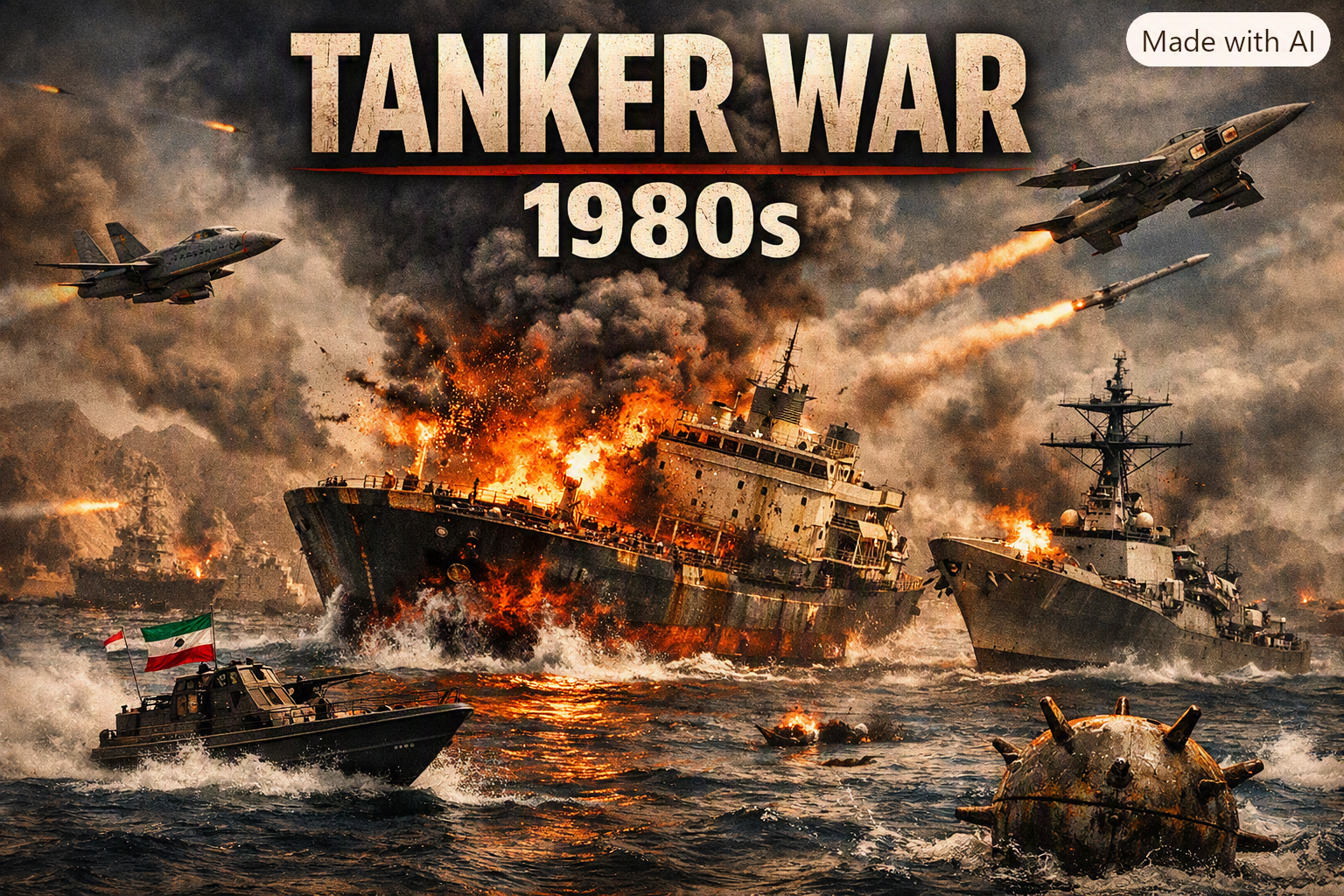
Operation Praying Mantis Strait of Hormuz was one of the most decisive naval battles since World War II. It unfolded on April 18, 1988, during the final phase of the Iran–Iraq War, when tensions in the Strait of Hormuz and the Persian Gulf reached their peak. The operation was America’s direct retaliation against Iran after the USS Samuel B. Roberts struck an Iranian mine. What followed was a swift, coordinated assault that crippled Iran’s naval capabilities and reshaped Gulf security for decades.
🌍 Background: The Gulf on Edge
By 1988, the Tanker War had already turned the Persian Gulf into a combat zone. Both Iran and Iraq were attacking oil tankers to weaken each other’s economies. The U.S. had begun escorting Kuwaiti tankers under American flags to protect them from Iranian mines and missiles. On April 14, 1988, the frigate USS Samuel B. Roberts hit a mine laid by Iran. The explosion tore a massive hole in the hull, injuring ten sailors. The ship survived, but the incident demanded a response. Four days later, the U.S. Navy launched Operation Praying Mantis.
📅 Sequence of Events: April 18, 1988 (Operation Praying Mantis Strait of Hormuz)
Morning – The Strike Begins At dawn, U.S. forces attacked two Iranian oil platforms—Sassan and Sirri—used for surveillance and military operations. Marines boarded the platforms, seized intelligence, and destroyed them with explosives. The strikes were precise and symbolic: Iran’s ability to monitor Gulf traffic was crippled.
Midday – Naval Engagements Iran retaliated by deploying fast attack boats and missile‑armed frigates. The Iranian ship Joshan fired a missile at the USS Wainwright, which was intercepted. The U.S. responded with Harpoon missiles and gunfire, sinking Joshan. Another Iranian vessel, Sahand, launched missiles at U.S. aircraft and was hit by multiple bombs and missiles in return. It sank in flames. Later, Sabalan, another Iranian frigate, was bombed and disabled.
Evening – Operation Ends By sunset, Iran’s naval presence was shattered. One frigate sunk, another crippled, and several speedboats destroyed. The U.S. suffered no losses. The operation lasted less than twelve hours but changed the balance of power in the Gulf.
⚡ Impact on Global Energy and Geopolitics
Operation Praying Mantis sent a clear message: the United States would not tolerate attacks on its vessels or disruption of oil routes. The Strait of Hormuz remained open, and tanker traffic resumed under heavy protection. Iran’s naval ambitions were curtailed. The operation also demonstrated the effectiveness of modern naval warfare—precision strikes, electronic countermeasures, and coordinated air‑sea operations.
For global markets, the operation stabilized oil prices temporarily. Traders viewed the U.S. intervention as a guarantee of Gulf security. Yet it also deepened Iran’s hostility toward Western powers, setting the stage for future confrontations.
🛡️ Strategic Significance
The operation was not just retaliation—it was a strategic demonstration. The U.S. Navy proved its ability to dominate the Gulf and protect energy routes. Iran learned that asymmetric tactics like mining could provoke overwhelming responses. The Strait of Hormuz, once a contested zone, became a symbol of deterrence.
Operation Praying Mantis also influenced naval doctrine worldwide. It showed how limited, high‑precision engagements could achieve decisive results without prolonged warfare. The lessons shaped future U.S. operations in the Middle East, from the Gulf War to later maritime patrols.
🔮 Legacy and Lessons
Operation Praying Mantis remains a benchmark in naval history. It was the largest U.S. surface engagement since World War II and a turning point in Gulf geopolitics. The operation reinforced the principle that freedom of navigation in the Strait of Hormuz is non‑negotiable. It also marked the end of Iran’s aggressive naval posture during the Iran–Iraq War.
In the decades that followed, every Gulf crisis—from the 2019 tanker attacks to the 2026 West Asia conflict—echoed its lessons. Deterrence, precision, and control of sea lanes remain the pillars of maritime strategy.
📌 Conclusion
Operation Praying Mantis was swift, decisive, and symbolic. It restored confidence in global oil routes, reasserted U.S. dominance in the Gulf, and reshaped Iran’s naval doctrine. The sequence of events—from the mine strike to the retaliatory assault—illustrates how a single incident can trigger a geopolitical chain reaction.
2 thoughts on “Operation Praying Mantis: The Day the U.S. Navy Struck Back in the Persian Gulf”