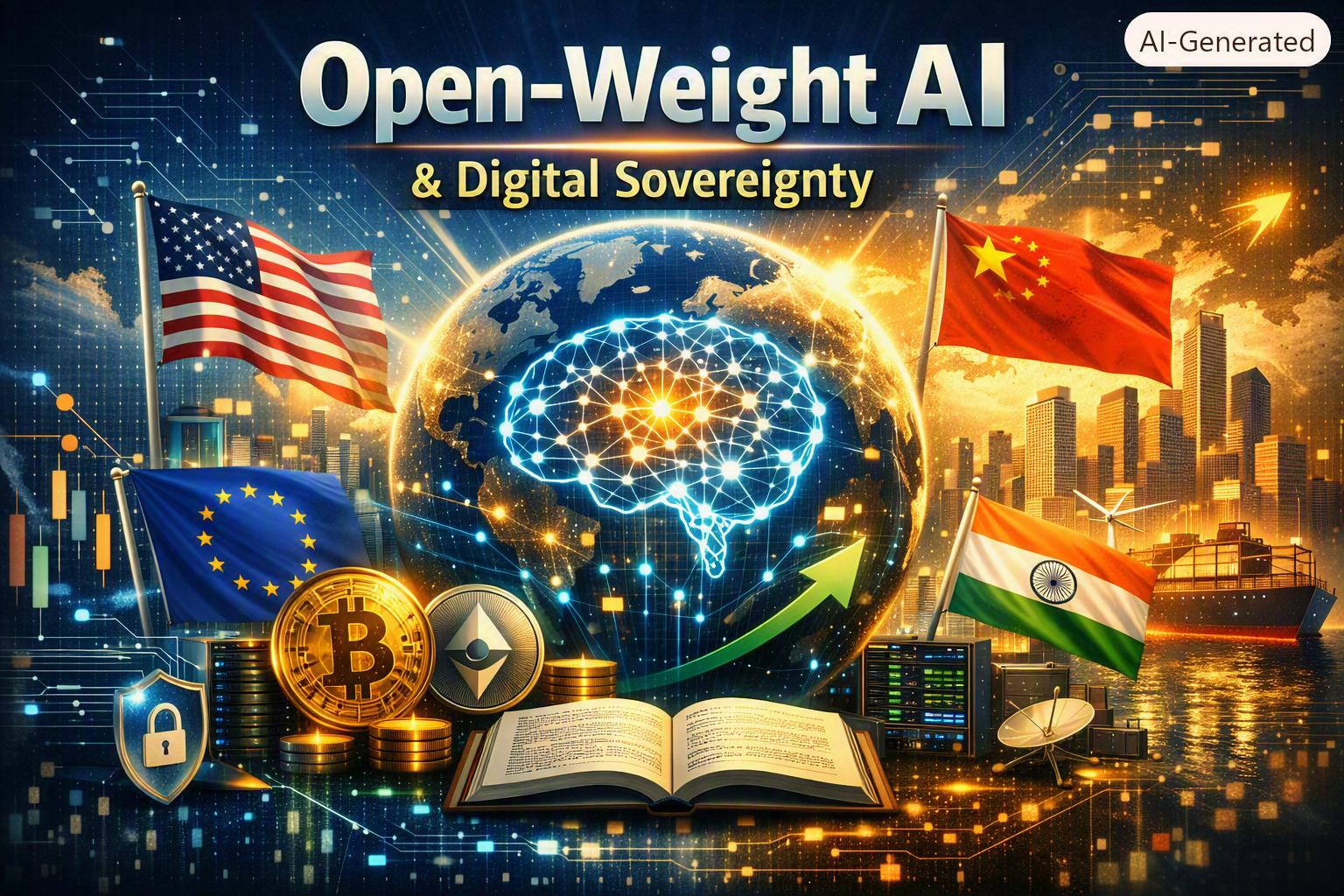
Technology has always been about control — from who builds the machines to who owns the data. In 2026, the frontier has shifted again: open‑weight AI models. These systems, unlike closed models locked behind corporate walls, are transparent, customizable, and increasingly seen as a matter of national security.
🏛️ Why Sovereignty Matters in AI
AI is no longer just a tool; it’s open‑weight AI infrastructure. Nations worry that relying on closed models from a handful of companies could leave them vulnerable. Just as oil shaped geopolitics in the 20th century, AI weights and datasets may define power in the 21st.
- United States: Balancing innovation with regulation, while private giants dominate.
- European Union: Pushing for open standards under the AI Act.
- Asia: China restricts foreign AI, while India and Singapore explore open‑source alternatives.
- Global South: Sees open models as a way to leapfrog dependence on Western tech.
⚡ The Rise of Open‑Weight Models
Recent breakthroughs have accelerated adoption.
Open‑weight AI is now driving broader deployment.
- Claude Sonnet 5 and NVIDIA Nemotron 3 Ultra show open models can rival closed systems.
- Z.AI GLM‑5.2 in China demonstrates regional AI sovereignty.
- Hugging Face and community projects democratize access, lowering barriers for startups and universities.
These open‑weight AI models are not just cheaper — they’re strategic assets.
💰 Economic & Geopolitical Impact
Open‑weight AI could reshape the global economy much like crypto did:
- Cost Efficiency: Nations save billions by avoiding licensing fees.
- Innovation Boost: Local startups can build tailored solutions.
- Trade & Tech Balance: Reduces dependency on US‑based giants.
- Education & Research: Universities gain access to cutting‑edge models without corporate gatekeeping.
🚦 Challenges Ahead: open‑weight AI
- Quality Gap: Open models still lag in some benchmarks.
- Security Risks: Transparency can be exploited by malicious actors.
- Fragmentation: Too many competing standards may slow adoption.
- Political Pushback: Closed‑model companies lobby hard against open alternatives.
🔑 Why This Matters
- Ensures digital sovereignty for nations.
- Democratizes AI access for startups and researchers.
- Reduces dependency on a few corporate monopolies.
- Shapes the future of geopolitics and finance in the digital era.
📝 Final Word
Open‑weight AI models are more than just technology — they’re a strategic weapon in the digital age. Just as crypto challenged banks, open AI challenges monopolies. The nations that embrace transparency and sovereignty may find themselves leading the next wave of global innovation.